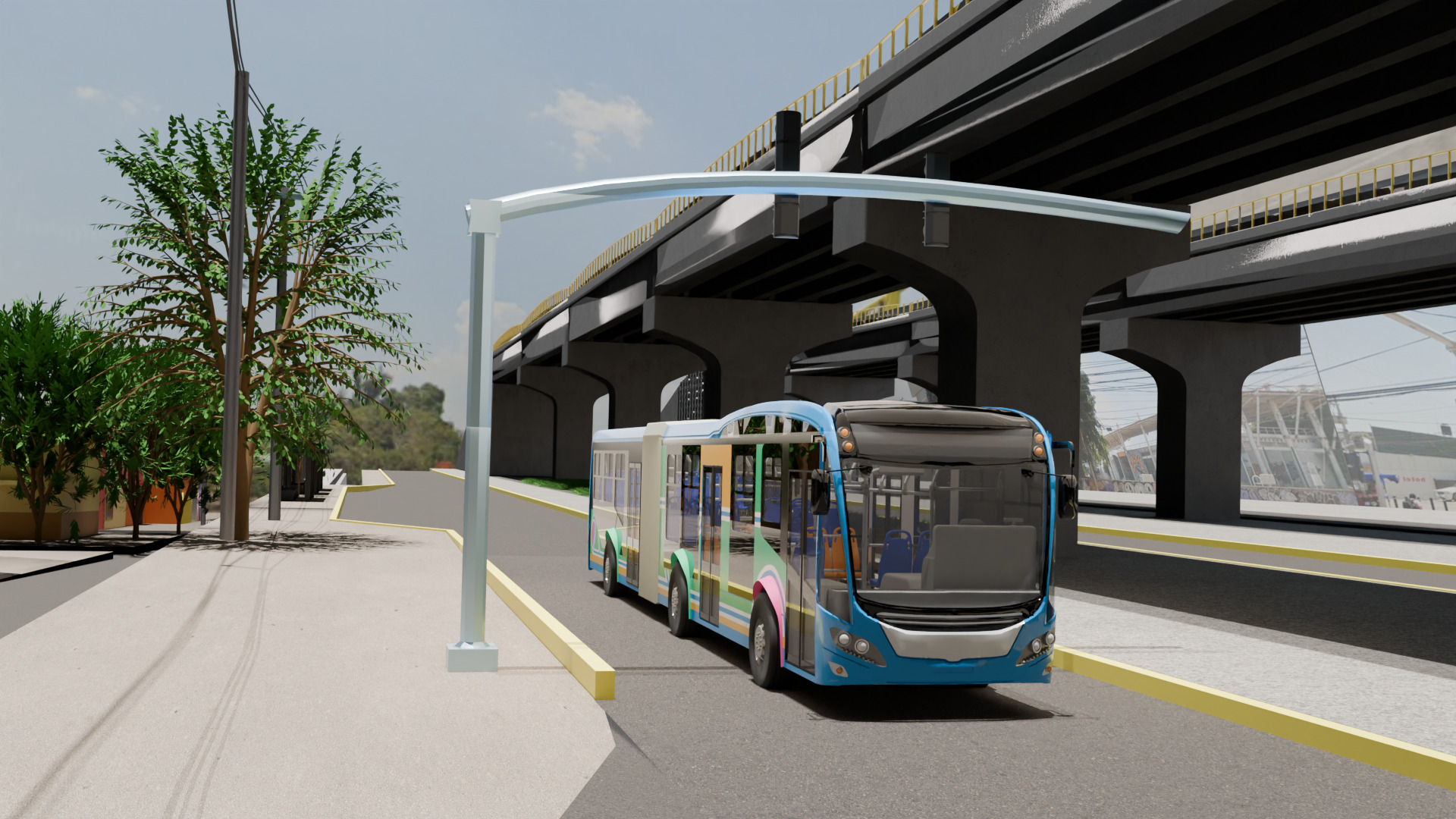
Metgroup needed to present its vehicle security and technology ecosystem to clients and stakeholders through something people could really experience. A full-scale physical model wasn't always feasible due to travel and location logistics, so the answer had to be an immersive experience that was easy to transport. The brief: a first-person VR experience inside one of their buses, showing the full range of installed solutions as they appear in a real operating scenario.
I handled it end to end: modeling the bus interior in Blender, rigging the animations, writing the interaction logic and shipping the final build with the Meta SDK.
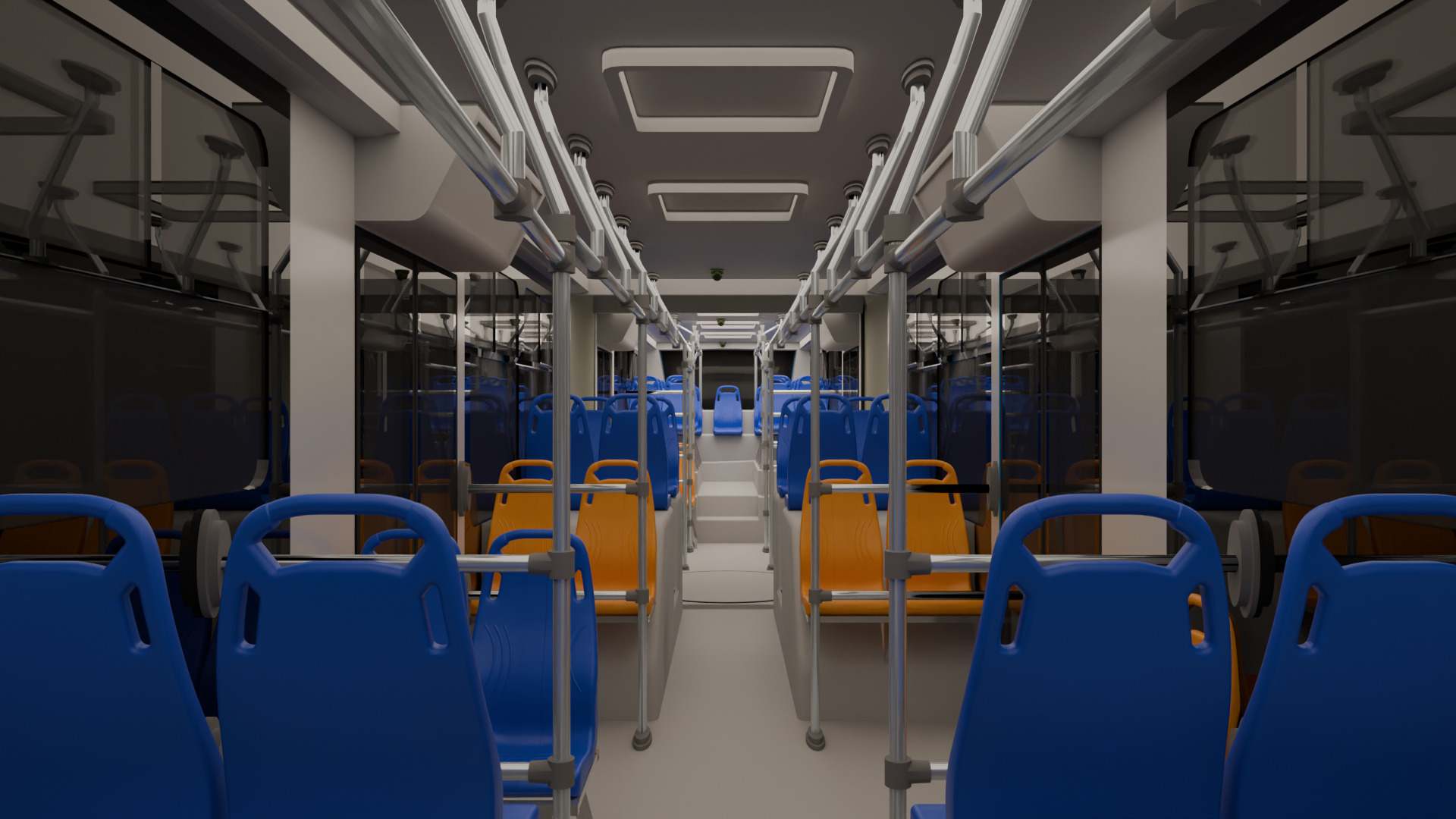
Making a sales tool feel like a real place
The hardest problem wasn't technical, it was perceptual. The people who would use this experience know these buses from the inside out. The environment had to be believable to someone with an intimate reference for the real thing, not just plausible to someone who has never been on board.
That shaped every decision: how light falls through the windows, where the seats and handrails sit, how the camera moves as the bus rounds a curve. The technology Metgroup installs (security systems, connectivity hardware, passenger monitoring) had to appear exactly where it appears in the field.
"I worked on the assumption that the people looking at this experience would notice a camera mounted 15 cm from where it actually goes."
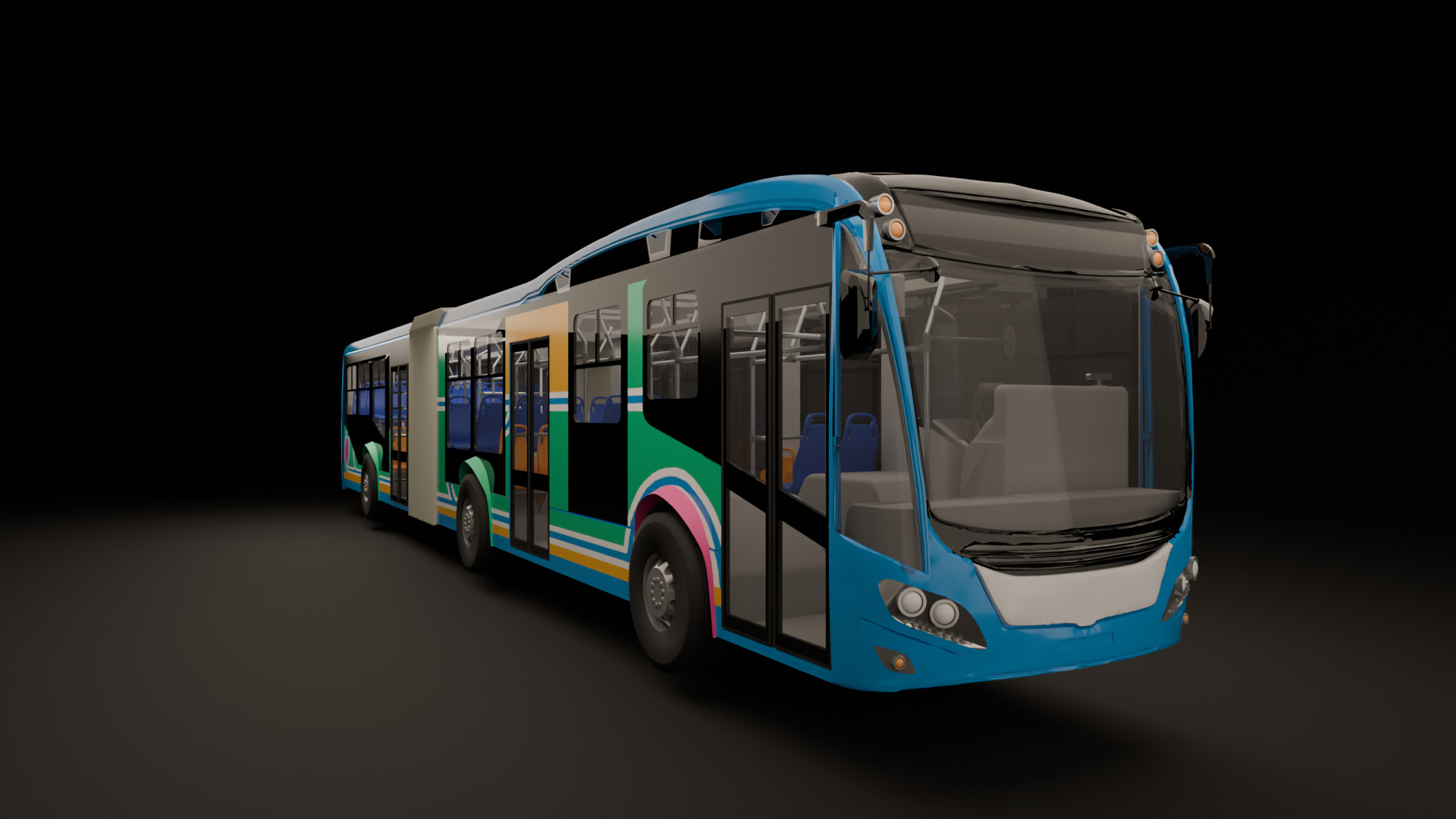
From geometry to presence
The build started in Blender: modeling the bus shell using the technical planes as reference, texturing the surfaces and placing every piece of Metgroup hardware at its real-world location. Once the environment held up visually, I moved into the Meta SDK to wire the interactions: first-person navigation, hotspots that surface product information, and a path that follows the vehicle's actual route.
The animation layer came last: subtle motion to simulate the bus in transit, ambient audio and the small environmental details that turn something that looks like “just” a model into something that feels like a real place.
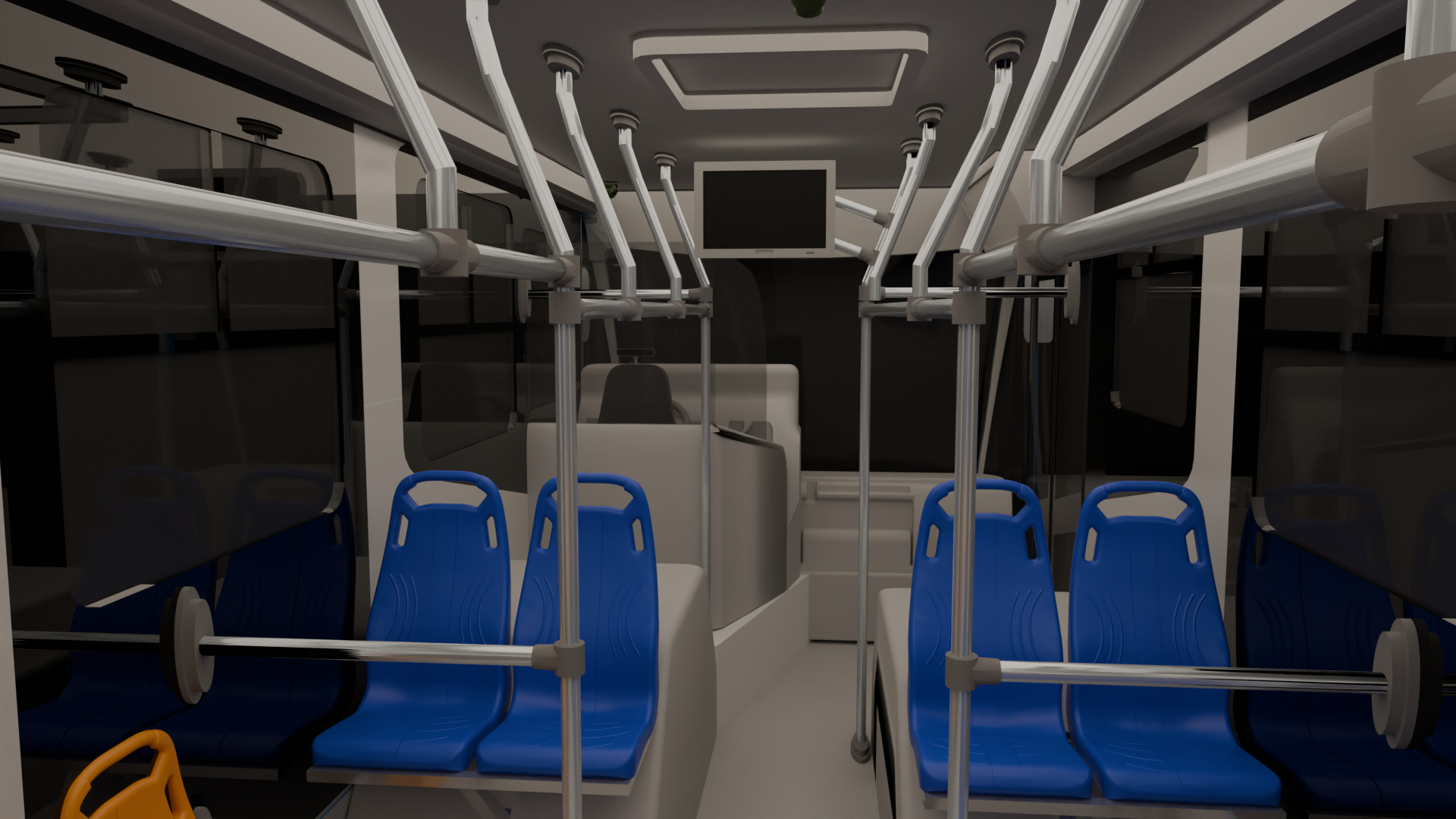
The experience was presented to Metgroup's leadership team. The concept and execution were mostly well-received, but a critical gap emerged: the 3D model referenced a bus variant that stopped being used recently in that country, so, for a tool whose entire value is fidelity to reality, that mismatch made it unlaunchable in its current form.
In B2B visualization, fidelity is an argument, not an aesthetic choice. A bus that looks almost right reads as wrong to the people who operate it every day. Before modeling begins, lock the exact vehicle variant from technical drawings, and keep checking the market decisions that affect the product. A week of reference alignment at the start can save a project from failing at the finish line.